Archive

Posts Tagged ‘spelling worksheets’

The Final y Spelling Rule

Final y Spelling Rule

The Final y Spelling Rule

The Final Spelling Rule drives people crazy. I just typed in “final y spelling rule” into Google and 40,300,000 searches came back, so if you searched the same, you are not alone.

That final is one of the most adaptable letters. Of course you all remember that the vowels are a, e, i, o, and u…plus sometimes y. This “sometimes y” is true because, by definition, every English syllable has a vowel sound, and when follows a consonant at the end of a syllable or serves as the syllable itself, it produces the long /i/ vowel sound (when accented) or long /e/ vowel sound (when unaccented). Examples: by/pass, ba/by

Also, some words have in the middle of a syllable and it is pronounced as a short /i/ vowel sound. Examples: gym, mys/tic

However, the final spelling at the end of the syllable, when adding on a suffix, is the spelling that bothers most writers. When do you keep the and when do you drop it before adding on the suffix?

*****

The Final y Spelling Rule

Keep the y when adding an ending if the word ends in a vowel, then a y (delay-delayed), or if the ending begins with an i (copy-copying). Change the y to i when adding an ending if the word ends in a consonant, then a y (pretty-prettiest).

Exceptions to the rule: daily, dryly, dryness, paid, said, shyly, shyness, slyly, slyness

Check out the song! The Final y Spelling Rule

Hickory Dickory Y
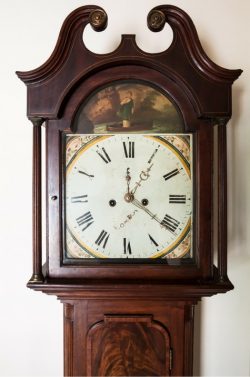
The Clock Struck One

(to the tune of “Hickory Dickory Dock”)

If a root ends in a vowel,

Hickory, dickory dock,

And after that a y.

The mouse ran up the clock.

Just keep the y—and then said I,

The clock struck one—the mouse ran down,

“Add on the suffix to end.”

Hickory dickory dock.

But if a consonant then

Hickory, dickory dock,

A y should end a word,

The mouse ran up the clock.

Just change the y into an i

The clock struck two—the mouse ran down,

Except if the suffix has i.

Hickory dickory dock.

*****

A Model Grades 3-8 Spelling Scope and Sequence

Differentiated Spelling Instruction Grades 4-8

Differentiated Spelling Instruction

Preview the Grades 3-8 Spelling Scope and Sequence tied to the author’s comprehensive grades 3-8 Language Strand programs. The instructional scope and sequence includes grammar, usage, mechanics, spelling, and vocabulary. Teachers and district personnel are authorized to print and share this planning tool, with proper credit and/or citation. Why reinvent the wheel? Also check out my articles on Grammar Scope and Sequence, Mechanics Scope and Sequence, and Vocabulary Scope and Sequence.

FREE DOWNLOAD TO ASSESS THE QUALITY OF PENNINGTON PUBLISHING AMERICAN ENGLISH AND CANADIAN ENGLISH SPELLING PROGRAMS. Check out these grades 3-8 programs HERE. Administer my FREE comprehensive Diagnostic Spelling Assessment with audio file and recording matrix. It has 102 words (I did say comprehensive) and covers all common spelling patterns and conventional spelling rules. It only takes 22 minutes and includes an audio file with test administration instructions. Once you see the gaps in your students’ spelling patterns, you’re going to want to fill those gaps.

Get the The Final y Spelling Rule FREE Resource:

Grammar/Mechanics, Spelling/Vocabulary , , , , , , , , , , ,

Why Johnny Can’t Spell

“Johnny could be a great writer, but his terrible spelling just gets in the way. He just can’t get down on paper what he wants to say. Johnny repeats the same spelling mistakes over and over in his writing, now matter how many times I red-mark them. I’ve had him write out a spelling word fifty times and still misspell that same word on his next assignment. It drives me crazy.”

Know a student like Johnny? Everyone does. Is there something neurologically mis-wired or does he have dyslexia? Probably not. Yet, year after year, Johnny lags further and further behind his classmates in his spelling proficiency. Can we blame the English sound-spelling system? Only about half of our spellings exactly match their sounds. Or how about blaming the “whole language” instructional fad in which teachers threw out their spelling workbooks and the traditional weekly spelling test? Or how about blaming Dad or Mom?

With more brain research, we may find a genetic predisposition to poor spelling. It may be unfair, but society judges poor spellers quite harshly. Misspelling words on a job application won’t land Johnny a job. And “spell check” and dictionaries are not complete fixes. After all, you have to be able to recognize a correct spelling or know how to spell a word to use these resources. Frankly, we do a disservice to Johnny when we excuse his deficiency with a comment such as “Spelling doesn’t matter. Albert Einstein was a poor speller, too.”

So what can we do that really works to improve Johnny’s spelling? First, find out what exactly Johnny knows and does not know. Use an effective diagnostic test that pinpoints his spelling weaknesses. Target those weaknesses with specific skill worksheets, word sorts, and game card practice. Find these resources at your local bookstore or on the web. Next, teach the rules of syllabication and have Johnny practice sight syllable spellings with oral drills. Spelling is an auditory process-it is not a visual process. Encoding a word involves connecting letter relationships to the sounds that make up that word. Students need to develop automaticity with the most common sight syllables. Finally, connect spelling instruction to vocabulary instruction. Over 50% of our academic language is built on ancient Greek and Latin word parts. Spelling and vocabulary have a reciprocal relationship-spelling influences vocabulary and, conversely, vocabulary influences spelling. Have Johnny practice the spellings and definitions of the most common Greek and Latin roots and affixes.

Next, teach the rules of syllabication and have Johnny practice sight syllable spellings with oral drills. Spelling is an auditory process-it is not a visual process. Encoding a word involves connecting letter relationships to the sounds that make up that word. Finally, connect spelling instruction to vocabulary instruction. Over 50% of our academic words are built on ancient Greek and Latin word parts. Spelling and vocabulary have a reciprocal relationship-spelling influences vocabulary and, conversely, vocabulary influences spelling. Have Johnny practice the spellings and definitions of the most common Greek and Latin roots and affixes. Use the highest utility word parts, game cards, worksheets, and fun games to aid effective practice.

*****

Intervention Program Science of Reading

The Science of Reading Intervention Program

The Science of Reading Intervention Program: Word Recognition includes explicit, scripted, sounds to print instruction and practice with the 5 Daily Google Slide Activities every grades 4-adult reading intervention student needs: 1. Phonemic Awareness and Morphology 2. Blending, Segmenting, and Spelling 3. Sounds and Spellings (including handwriting) 4. Heart Words Practice 5. Sam and Friends Phonics Books (decodables). Plus, digital and printable sound wall cards, speech articulation songs, sounds to print games, and morphology walls. Print versions are available for all activities. First Half of the Year Program (55 minutes-per-day, 18 weeks)

The Science of Reading Intervention Program: Language Comprehension resources are designed for students who have completed the word recognition program or have demonstrated basic mastery of the alphabetic code and can read with some degree of fluency. The program features the 5 Weekly Language Comprehension Activities: 1. Background Knowledge Mentor Texts 2. Academic Language, Greek and Latin Morphology, Figures of Speech, Connotations, Multiple Meaning Words 3. Syntax in Reading 4. Reading Comprehension Strategies 5. Literacy Knowledge (Narrative and Expository). Second Half of the Year Program (30 minutes-per-day, 18 weeks)

The Science of Reading Intervention Program: Assessment-based Instruction provides diagnostically-based “second chance” instructional resources. The program includes 13 comprehensive assessments and matching instructional resources to fill in the yet-to-be-mastered gaps in phonemic awareness, alphabetic awareness, phonics, fluency (with YouTube modeled readings), Heart Words and Phonics Games, spelling patterns, grammar, usage, and mechanics, syllabication and morphology, executive function shills. Second Half of the Year Program (25 minutes-per-day, 18 weeks)

The Science of Reading Intervention Program BUNDLE  includes all 3 program components for the comprehensive, state-of-the-art (and science) grades 4-adult full-year program. Scripted, easy-to-teach, no prep, no need for time-consuming (albeit valuable) LETRS training or O-G certification… Learn as you teach and get results NOW for your students. Print to speech with plenty of speech to print instructional components.

Click the SCIENCE OF READING INTERVENTION PROGRAM RESOURCES for detailed program description, sample lessons, and video overviews. Click the links to get these ready-to-use resources, developed by a teacher (Mark Pennington, MA reading specialist) for teachers and their students.

Get the SCRIP Comprehension Cues FREE Resource:

Get the Diagnostic ELA and Reading Assessments FREE Resource:

*****

Spelling/Vocabulary , , , , , , ,