Archive

Posts Tagged ‘Mark Pennington’

Interpret to Increase Comprehension

SCRIP Comprehension Strategies

SCRIP Comprehension Cues

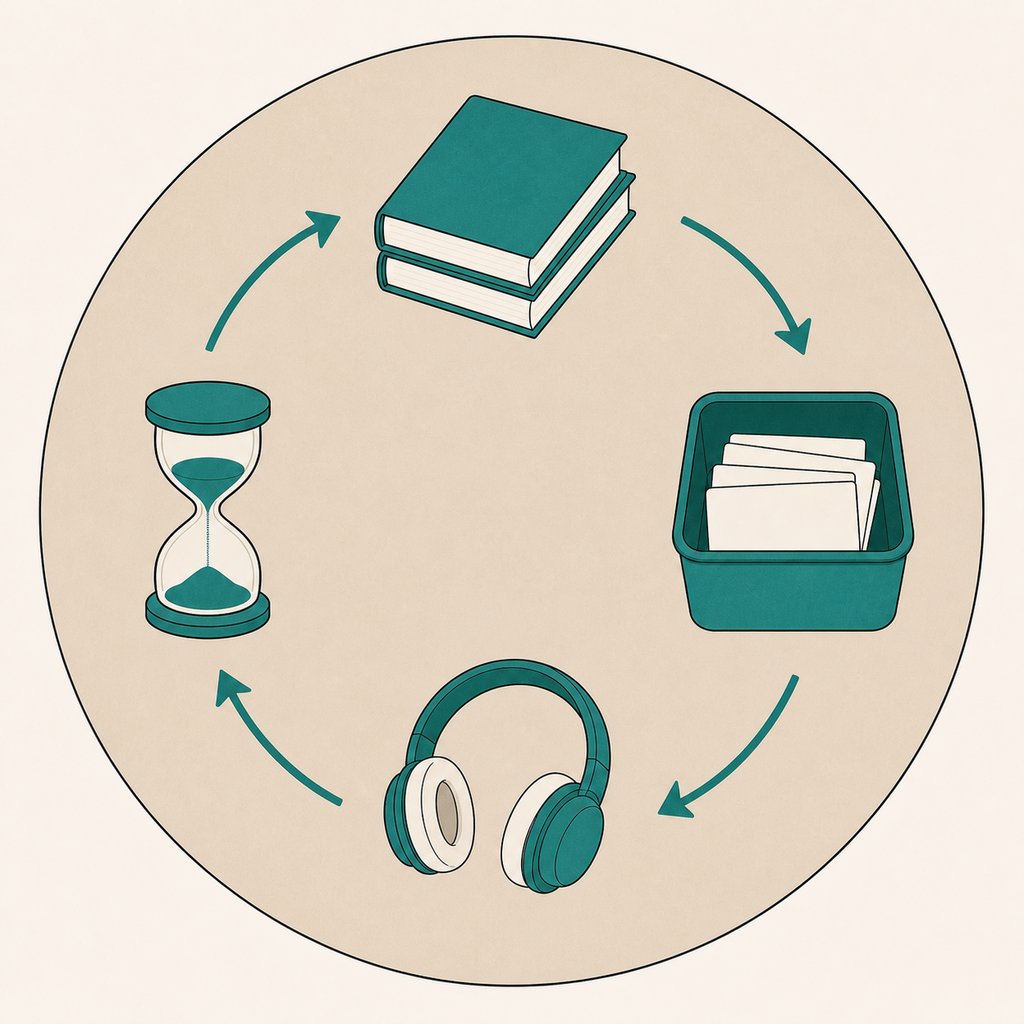
Good reading habits can be developed by using specific cueing strategies. These cueing strategies assign readers a set of tasks to perform while reading to maintain interactive dialogue with the text. Students can interpret to increase comprehension.

The author of this article, Mark Pennington, has developed five comprehension cues, using the SCRIP acronym, which work equally well with expository and narrative text. The SCRIP acronym stands for Summarize, Connect, Re-think, Interpret, and Predict.

Both good and struggling readers can practice these cueing strategies to improve comprehension. Despite what many believe, reading is not a natural process; it needs to be taught, and not just caught. Teaching students to question the text they read by prompting themselves with the SCRIP strategies will help them understand and better remember what they read.

Teaching students to carry on an internal dialog while they read is critically important. Comprehension cues prompt the reader to talk to the text and the author. Check out how to get developing readers to carry on this conversation here.

Interpret to Increase Comprehension

The fourth cueing strategy in the SCRIP comprehension cues is Interpret. Interpret means to determine what an author means in a section of narrative or expository reading text. The meaning may be implied, not stated.

Reading researchers have generally described two skills of interpretation or inference: Cromley and Azevedo (2007) discuss text-to-text and background-to-text interpretations. Others label the two reading skills as coherence or text-connecting and elaborative or gap-filling.

Text-to-Text

The meaning may necessitate synthesizing two or more reading sections to arrive at what the author means. Or the meaning may be derived from breaking up what the author says and examining each part independently as in analysis.

Background-to-Text

The meaning may necessitate filling in the gaps between what the author says and what the author expects that the reader already knows. Correct interpretation can depend on the readers prior knowledge. Pre-teaching necessary prior knowledge may be necessary if the author assumes a certain vault of knowledge or experience to be able to correctly parse what the author adds to, comments upon, or argues against.

Make sure to stress that interpretations are not simply the reader’s opinions. Good interpretations derive from the textual evidence and arrive at what the author means. Interpretations can be right and also wrong.

Unlike the summaryconnect , and re-think cueing strategies, in which the reader needs to divide a reading into meaningful sections for the reader to pause to summarize and make connections, the re-think and interpret strategies are applied when the reader pauses following a section which is confusing or seems inconsistent with the previous section.

Because teaching the Interpret cueing strategy is the focus of this article, let’s work through a teaching script to teach this Interpret cueing strategy.

Interpret means to focus on what the author means. Authors may directly say what they mean right in the lines of the text. They also may suggest what they mean with hints to allow readers to draw their own conclusions. These hints can be found in the tone (feeling/attitude) of the writing, the word choice, or in other parts of the writing that may be more directly stated.”

“When you reach a confusing part of a story, an article, a poem, or your textbook, go back to re-read the last part of the section that you understood completely and then read into the confusing section. Ask yourself what the author means in the confusing section. Often what the author means is not exactly stated. The author may choose to hint at the meaning and require the reader to figure out what is really meant.”

“Additionally, an author might require the reader to figure out the meaning by putting together what is said in one portion of the reading with another. It’s just like explaining a peanut butter and jelly sandwich to someone who has never eaten one. You’ve got to explain what peanut butter is and what jelly is first. Then you can tell how the combination of the two creates a salty and sweet flavor experience.”

“Let’s take a look at a fairy tale that many of you will have read or heard about and practice how to interpret some confusing passages.”

Here is a one-page version of “Goldilocks and the Three Bears” for you to download, print, and distribute to your students. Have students read, break the reading into sections, and complete the summaries, connections, and re-thinks in their heads. Direct students to answer the Interpret questions. Share out the student answers. Check out a YouTube video demonstration of the Interpret Comprehension Strategy, using “Goldilocks and the Three Bears” fairy tale to illustrate this strategy. The storyteller first reads the fairy tale without comment. Next,  the story is read once again as a think-aloud with interruptions to show how readers should re-think sections of the reading as they read to monitor and build comprehension.

If you have found this article to be helpful, check out the next comprehension strategy, “Predict,” and the resources.

*****

The Science of Reading Intervention Program: Word Recognition includes explicit, scripted instruction and practice with the 5 Daily Google Slide Activities every reading intervention student needs: 1. Phonemic Awareness and Morphology 2. Blending, Segmenting, and Spelling 3. Sounds and Spellings (including handwriting) 4. Heart Words Practice 5. Sam and Friends Phonics Books (decodables). Plus, digital and printable sound wall cards and speech articulation songs. Print versions are available for all activities. First Half of the Year Program (55 minutes-per-day, 18 weeks)

The Science of Reading Intervention Program: Language Comprehension resources are designed for students who have completed the word recognition program or have demonstrated basic mastery of the alphabetic code and can read with some degree of fluency. The program features the 5 Weekly Language Comprehension Activities: 1. Background Knowledge Mentor Texts 2. Academic Language, Greek and Latin Morphology, Figures of Speech, Connotations, Multiple Meaning Words 3. Syntax in Reading 4. Reading Comprehension Strategies 5. Literacy Knowledge (Narrative and Expository). Second Half of the Year Program (30 minutes-per-day, 18 weeks)

The Science of Reading Intervention Program: Assessment-based Instruction provides diagnostically-based “second chance” instructional resources. The program includes 13 comprehensive assessments and matching instructional resources to fill in the yet-to-be-mastered gaps in phonemic awareness, alphabetic awareness, phonics, fluency (with YouTube modeled readings), Heart Words and Phonics Games, spelling patterns, grammar, usage, and mechanics, syllabication and morphology, executive function shills. Second Half of the Year Program (25 minutes-per-day, 18 weeks)

The Science of Reading Intervention Program BUNDLE  includes all 3 program components for the comprehensive, state-of-the-art (and science) grades 4-adult full-year program. Scripted, easy-to-teach, no prep, no need for time-consuming (albeit valuable) LETRS training or O-G certification… Learn as you teach and get results NOW for your students. Print to speech with plenty of speech to print instructional components.

Get the SCRIP Comprehension Cues FREE Resource:

Literacy Centers, Reading, Study Skills , , , , , , ,

Re-think to Increase Comprehension

SCRIP Comprehension Strategies

SCRIP Comprehension Cues

Unfortunately, there are no silver bullets to kill off reading comprehension problems. Poor comprehension tends to be self-perpetuating because a reader’s approach to acquiring meaning from text is habitual. Bad reading habits are reinforced each time a reader reads an online post, book, or magazine unless unless those bad reading habits are replaced with good  reading habits. Good reading habits can be taught and reinforced with specific cueing strategies. The cueing strategies provide readers a set of tasks to perform while reading to maintain active dialogue with what the author says and means. Students need to learn to re-think to increase reading comprehension.

The author of this article, Mark Pennington, has developed five cueing strategies, using the SCRIP acronym, which work equally well with expository and narrative text. The SCRIP acronym stands for Summarize, Connect, Re-think, Interpret, and Predict.

To improve reading comprehension, both good and struggling readers can practice these cueing strategies. Reading is not a natural process; it needs to be taught, not just caught. Developing readers do not have a priori understanding about how to understand and remember what they read. Thus, teachers and parents play a crucial role in helping to develop good readers.

Teaching students to carry on an internal dialog while they read is vitally important. Cueing strategies prompt the reader to dialog with the text and the author. Check out how to get developing readers to carry on this conversation here.

Re-Think to Improve Comprehension

The third cueing strategy in the SCRIP comprehension cues is Re-Think. Re-Think means to look at a section of reading text (narrative or expository) from a different point of view to see if a different meaning is intended by the author, other than the one intitially understood by the reader. It requires and re-thinking.

People who play board games are accustomed to looking at things from different perspectives. In Boggle®, Risk®, Settlers of Catan®, or Scrabble®, players know that seeing things from the opposite side of the game really changes how the player understands or plays the game.

Unlike the summary and connect cueing strategies, in which the reader needs to divide a reading into meaningful sections for the reader to pause to summarize and make connections, the Re-think strategy has the reader pause when the text following the section is confusing or seems inconsistent with the previous section.

Since teaching the Re-think cueing strategy is the focus of this article, let’s work through a teaching script to teach this Re-think cueing strategy.

Re-think means to re-read a section of the text to look at things from a different point of view. When you start reading text which seems different than what you have been reading or if you get confused, don’t keep on reading in the hope that you will catch on to what was meant. The author may actually be saying something different than what you first thought. Or first impressions aren’t always accurate. When we look from another point of view, we oftentimes find a different truth.”

“When you reach that point in a reading text, go back to re-read the last part of the section that you completely understood and then read into the confusing section. Ask how the author may mean something different than what you first thought. In other words, re-trace your steps. Your mom helps you do this when you lose something. She asks, ‘When was the last time you remember having it? What did you do next?’ Do the same in your reading when you get lost; go back to the point where you weren’t lost and then re-read the confusing text.”

“Also, when you re-read be especially alert to overlooked transition change words, such as although, but, and however or negative words or prefixes, such as not or un. These words or word parts can be extremely important to a correct understanding of what the author intends to mean.”

“Let’s take a look at a fairy tale that many of you will have read or heard about and practice how to re-think some confusing passages.”

Here is a one-page version of “Little Red Riding Hood” for you to download, print, and distribute to your students. Have students read, break the reading into sections, and complete the summaries and connections in their heads. Direct students to answer the Re-think questions. Share out the summaries, connections, and Re-Think answers. Check out a YouTube video demonstration of the Re-think Comprehension Cue, using Little Red Riding Hood fairy tale to illustrate this strategy. The storyteller first reads the fairy tale without comment. Next,  the story is read once again as a think-aloud with interruptions to show how readers should re-think sections of the reading as they read to monitor and build comprehension.

If you have found this article to be helpful, check out the next comprehension strategy, “Interpret,” and the resources to teach this cueing strategy.

Get the SCRIP Comprehension Cues FREE Resource:

Intervention Program Science of Reading

The Science of Reading Intervention Program

The Science of Reading Intervention Program: Word Recognition includes explicit, scripted instruction and practice with the 5 Daily Google Slide Activities every reading intervention student needs: 1. Phonemic Awareness and Morphology 2. Blending, Segmenting, and Spelling 3. Sounds and Spellings (including handwriting) 4. Heart Words Practice 5. Sam and Friends Phonics Books (decodables). Plus, digital and printable sound wall cards and speech articulation songs. Print versions are available for all activities. First Half of the Year Program (55 minutes-per-day, 18 weeks)

The Science of Reading Intervention Program: Language Comprehension resources are designed for students who have completed the word recognition program or have demonstrated basic mastery of the alphabetic code and can read with some degree of fluency. The program features the 5 Weekly Language Comprehension Activities: 1. Background Knowledge Mentor Texts 2. Academic Language, Greek and Latin Morphology, Figures of Speech, Connotations, Multiple Meaning Words 3. Syntax in Reading 4. Reading Comprehension Strategies 5. Literacy Knowledge (Narrative and Expository). Second Half of the Year Program (30 minutes-per-day, 18 weeks)

The Science of Reading Intervention Program: Assessment-based Instruction provides diagnostically-based “second chance” instructional resources. The program includes 13 comprehensive assessments and matching instructional resources to fill in the yet-to-be-mastered gaps in phonemic awareness, alphabetic awareness, phonics, fluency (with YouTube modeled readings), Heart Words and Phonics Games, spelling patterns, grammar, usage, and mechanics, syllabication and morphology, executive function shills. Second Half of the Year Program (25 minutes-per-day, 18 weeks)

The Science of Reading Intervention Program BUNDLE  includes all 3 program components for the comprehensive, state-of-the-art (and science) grades 4-adult full-year program. Scripted, easy-to-teach, no prep, no need for time-consuming (albeit valuable) LETRS training or O-G certification… Learn as you teach and get results NOW for your students. Print to speech with plenty of speech to print instructional components.

Reading, Study Skills , , , , ,

Summarize to Increase Comprehension

SCRIP Comprehension Strategies

SCRIP Comprehension Cues

Often teachers assume that summarizing is the same for both writing and reading. However, the purpose and task of summarizing is considerably different for these literary activities. Whereas the purpose of a writing summary is to identify the main or controlling idea or argument with supporting major details to put the thrust of exposition into a nutshell, the purpose of a reading summary is to build comprehension. This article focuses on reader-generated summarizing as a means of building reading comprehension. Students need to summarize to increase comprehension.

Now to make sure we are on the same page, we are not discussing reading a summary or abstract prior to reading a textbook chapter or article. This is an important means of building prior knowledge and a critical component of any good read-study method. My own PQ RAR read-study method emphasizes the importance of reading any available summaries prior to reading the text.

Instead, we are discussing why summarizing while reading is important and how to teach your students to do so.

First, the why. Reading research has consistently shown a statistically significant correlation between high levels of reading comprehension and high levels of active engagement with text and, conversely, low comprehension with low engagement. We call this engagement internal monitoring. Numerous studies have confirmed that “retrieving relevant knowledge during reading is essential for monitoring” (Otero & Kintsch, 1992; Vosniadou, Pearson, & Rogers, 1988). One important component of monitoring is summarizing.

A great way to demonstrate this internal monitoring is with a reader-author dialog. Try this think-aloud with your students to model what goes on inside a good reader’s head as the reader monitors text.

But what about summarizing, specifically?

“Summarizing and reviewing integrate and reinforce the learning of major points…these structuring elements not only facilitate memory for the information but allow for its apprehension as an integrative whole with recognition of the relationships between parts” (J. E. Brophy and T. L. Good, 1986).

“In a synthesis of the research on summarizing, Rosenshine and his colleagues found that strategies that emphasize the analytic aspect of summarizing have a powerful effect on how well students summarize” (1996).

Next, the how. Internal monitoring is more efficiently “taught,” rather than just “caught.” Readers can be taught to summarize while reading by learning and practicing  cueing strategies. Cueing strategies are simply prompts to focus the reader on the active and analytical tasks of reading.

Poor readers tend to view reading as a passive activity. The cueing strategies provide readers a set of tasks to perform while reading to maintain active dialogue with what the author says and means. The author of this article has developed five cueing strategies, using the SCRIP acronym, which work equally well with expository and narrative text. The SCRIP acronym stands for Summarize, Connect, Re-think, Interpret, and Predict.

Take the time to explicitly teach and model each of the five strategies. Emphasize one strategy at a time on a given text. Since Summarize is the focus of this article, let’s begin with a teaching script to teach this strategy.

Summarize to Increase Comprehension

“Summarize means to put together the main ideas and important details of a reading into a short-version of what the author has said. A summary can be of an entire reading, but it is more useful to divide your reading up into sections and summarize each section as you read.”

“Today we are going to learn why it is important to pause your reading at certain places and summarize sections of what you have just read and then we will learn how to do this.”

“First, the why. I know that pausing to summarize in the middle of your reading takes a bit more time than just reading without pausing, but not too much. You also might be worried that you might lose your concentration if you pause, but actually pausing to summarize will help you concentrate even more. Dividing your reading into sections will help you focus on understanding and remembering smaller chunks of reading, one at a time. You will also be able to remember each chunk of reading and apply your memory to the next reading section. It’s like playing a leveled video game: First, you master one level and the game pauses before you move on to the next level with new graphics, characters, or problems to solve. You use your summarized knowledge of how to beat the first level to help you master each following level, one at a time. After time you will be able to master most or all of the game. In the same way reading in sections and then summarizing will build your understanding of the whole reading.”

“Next, the how. As you know already, authors use paragraphs in articles or textbooks built upon the main idea known as the topic sentence. Most, but not all of the time, the topic sentence is the first sentence of the paragraph. In stories, authors start new paragraphs to signal something different in setting, plot, description, or dialog.”

“Paragraphs connect to each other to continue a certain idea or plot event. When a major change takes place, the author frequently uses transition words to tell the reader that something new is being introduced. Textbooks often use boldfaced subtitles to signal new sections. When the reading begins a new section, pause to summarize what you just read in the last chunk of reading.”

“For articles or textbooks use What, How, and Why as question-starters to help you put into your own words a short version of what you just read. For stories use Who, What, Where, When, and Why question-starters to help you do the same.

“Let’s take a look at a fairy tale that many of you will have read or heard about and practice how to divide a reading up into sections and summarize as we read.”

Here is a one-page version of “The Little Boy Who Cried Wolf” for you to download, print, and distribute to your students. Have students read each section and complete the summary. Then discuss why the section was a good chunk after which to pause and summarize and have students read their summaries. Coach as to what to and what not to include in reading summaries from your student examples. Check out a YouTube video demonstration of the Summarize Comprehension Cue, using The Boy Who Cried Wolf fairy tale to illustrate this strategy. The storyteller first reads the fairy tale without comment. Next,  the story is read once again as a think-aloud with interruptions to show how readers should summarize sections of the reading as they read to monitor and build comprehension.

If you have found this article to be helpful, check out the next comprehension strategy, “Connect,” and the resources to teach this cueing strategy.

Get the SCRIP Comprehension Cues FREE Resource:

Intervention Program Science of Reading

The Science of Reading Intervention Program

The Science of Reading Intervention Program: Word Recognition includes explicit, scripted instruction and practice with the 5 Daily Google Slide Activities every reading intervention student needs: 1. Phonemic Awareness and Morphology 2. Blending, Segmenting, and Spelling 3. Sounds and Spellings (including handwriting) 4. Heart Words Practice 5. Sam and Friends Phonics Books (decodables). Plus, digital and printable sound wall cards and speech articulation songs. Print versions are available for all activities. First Half of the Year Program (55 minutes-per-day, 18 weeks)

The Science of Reading Intervention Program: Language Comprehension resources are designed for students who have completed the word recognition program or have demonstrated basic mastery of the alphabetic code and can read with some degree of fluency. The program features the 5 Weekly Language Comprehension Activities: 1. Background Knowledge Mentor Texts 2. Academic Language, Greek and Latin Morphology, Figures of Speech, Connotations, Multiple Meaning Words 3. Syntax in Reading 4. Reading Comprehension Strategies 5. Literacy Knowledge (Narrative and Expository). Second Half of the Year Program (30 minutes-per-day, 18 weeks)

The Science of Reading Intervention Program: Assessment-based Instruction provides diagnostically-based “second chance” instructional resources. The program includes 13 comprehensive assessments and matching instructional resources to fill in the yet-to-be-mastered gaps in phonemic awareness, alphabetic awareness, phonics, fluency (with YouTube modeled readings), Heart Words and Phonics Games, spelling patterns, grammar, usage, and mechanics, syllabication and morphology, executive function shills. Second Half of the Year Program (25 minutes-per-day, 18 weeks)

The Science of Reading Intervention Program BUNDLE  includes all 3 program components for the comprehensive, state-of-the-art (and science) grades 4-adult full-year program. Scripted, easy-to-teach, no prep, no need for time-consuming (albeit valuable) LETRS training or O-G certification… Learn as you teach and get results NOW for your students. Print to speech with plenty of speech to print instructional components.

Literacy Centers, Reading, Study Skills , , , , ,

How to Teach the Common Core Vocabulary Standards

Academic language must be taught, not just caught.

According to the authors of the Common Core State Standards, “New words and phrases are acquired not only through reading and being read to but also through direct vocabulary instruction… Research suggests that if students are going to grasp and retain words and comprehend text, they need incremental, repeated exposure in a variety of contexts to the words they are trying to learn” (Appendix A).

Grammar, Mechanics, Spelling, and Vocabulary provides that incremental, repeated exposure in a variety of contexts: The program includes 56 vocabulary worksheets in the student workbook including context clues practice with word relationships, multiple meaning words, Greek and Latin word parts, figures of speech, connotations, and denotations/dictionary skills. Vocabulary Study Cards are provided for each lesson.

Appendix A details the categories of academic language to be taught within the Vocabulary Standards. The authors cite the research of Isabel L. Beck, Margaret G. McKeown, and Linda Kucan (2002, 2008) in which these authors describe “three levels, or tiers, of words in terms of the words’ commonality (more to less frequently occurring) and applicability (broader to narrower).

  • Tier One words are the words of everyday speech usually learned in the early grades.
  • Tier Two words (what the Standards refer to as general academic words) are far more likely to appear in written texts than in speech… Because Tier Two words are found across many types of texts, they are highly generalizable.
  • Tier Three words (what the Standards refer to as domain-specific words) are specific to a domain or field of study (lava, carburetor, legislature, circumference, aorta) and key to understanding a new concept within a text. Because of their specificity and close ties to content knowledge, Tier Three words are far more common in informational texts than in literature” (Appendix A).

Grammar, Mechanics, Spelling, and Vocabulary includes Tier Two academic vocabulary words from the research-based Academic Word List (Coxhead, A.

Pennington Publishing's Grammar, Mechanics, Spelling, and Vocabulary  Grades 4-8 Programs

Grammar, Mechanics, Spelling, and Vocabulary Grades 4-8 Programs

(2000). A new academic word list. In TESOL Quarterly, Vol. 34) and requires students to practice these words in depth by producing synonyms, antonyms, characteristics, examples, and pictures or symbols‒exactly as detailed by the Common Core authors.

Grammar, Mechanics, Spelling, and Vocabulary

The author of this article, Mark Pennington, has written the assessment-based Grammar, Mechanics, Spelling, and Vocabulary  Grades 4-8 programs to teach the Common Core grammar, usage, mechanics, spelling, and vocabulary Standards. Diagnostic assessments and targeted worksheets help your students catch up while they keep up with rigorous grade-level direct instruction.

Spelling/Vocabulary , , , , , ,

How to Teach the Common Core Spelling Standards

What do the Common Core authors have to say about spelling instruction?

The spelling Standards for Grades 4‒8 are as follows:

“Spell grade-appropriate words correctly, consulting references as needed.” (L.4.2e, L.5.2e)

“Spell correctly.” (L.6.2b, L.7.2b, L.8.2b)

Although lacking specificity in the Language Strand, the Common Core approach to spelling instruction is detailed in the Orthography section of Appendix A. This section includes examples of the sound-spelling patterns, syllable rules, and derivational suffixes (20‒22). Additionally, the K‒5 Reading: Foundational Skills Standards all require direct instruction of the phoneme-grapheme (spelling) correspondences (Reading: Foundational Skills) In other words, phonics and spelling.

The focus on spelling patterns draws heavily from the research of Dr. Louis Cook Moats, such as in Moats, L. C. (2008). Spellography for teachers: How English spelling works. (LETRS Module 3). Longmont, CO: Sopris West.

How to Teach the Common Core Spelling Standards

*****

My Grammar, Mechanics, Spelling, and Vocabulary program includes a grade-level spelling patterns program with weekly spelling tests and spelling sorts. Students review previous grade-level spelling patterns and are introduced to new grade-level spelling patterns (including derivational and etymological influences) throughout the weekly lessons. Students create Personal Spelling Lists from those words missed on the weekly diagnostic spelling tests, from words misspelled in their own writing, and from the spelling resources provided in the program Appendix. The program also provides a complete syllabication program with syllable and derivatives worksheets.

Additionally, the program provides a comprehensive remedial spelling program tied to the Diagnostic Spelling Assessment. Each grade-level diagnostic assessment varies in complexity to test all previous grade-level spelling patterns and takes about 20 minutes to administer.

Students complete remedial Spelling Pattern Worksheets for each unmastered spelling pattern as indicated by the test. Worksheets include the focus spelling pattern or spelling rule with examples, a spelling sort, word jumbles, and rhymes or book searches for the focus spelling pattern. Students self-correct and self-edit their answers from answer sheets to learn from their own mistakes. Finally, students complete a quick formative assessment labeled “Write” at the bottom of the worksheet to see if they can apply the focus spelling pattern within their own writing. Students mini-conference with the teacher and the teacher reviews the formative “Write” assessment. If mastered, the students record that mastery on the class recording matrix as detailed in the Grammar, Usage, and Mechanics section above. If not yet mastered, the teacher briefly re-teaches the spelling pattern and students try the formative assessment until mastery has been demonstrated.

Grammar, Mechanics, Spelling, and Vocabulary helps students learn the grade-level spelling patterns, the syllable rules, and the derivational spelling influences of our English orthography. The program also has the resources teachers need to individualize remedial spelling patterns‒exactly as described by the Common Core authors.

*****

Grammar, Mechanics, Spelling, and Vocabulary

Grammar, Mechanics, Spelling, and Vocabulary Grades 4, 5, 6, 7, 8 Programs

Or why not get the value-priced Grammar, Mechanics, Spelling, and Vocabulary (Teaching the Language Strand) grades 4, 5, 6, 7, and 8 BUNDLES? These grade-level programs include both teacher’s guide and student workbooks and are designed to help you teach all the Common Core Anchor Standards for Language. In addition to the Teaching Grammar and Mechanics program, each BUNDLE provides weekly spelling pattern tests and accompanying spelling sort worksheets (L.2), 56 language application opener worksheets (L.3), and 56 vocabulary worksheets with multiple-meaning words, Greek and Latin word parts, figures of speech, word relationships with context clue practice, connotations, and four square academic language practice (L.4, 5, and 6). Comprehensive biweekly unit tests measure recognition, understanding, and application of the grammar, mechanics, and vocabulary components.

The program also has the resources to meet the needs of diverse learners. Diagnostic grammar, usage, mechanics, and spelling assessments provide the data to enable teachers to individualize instruction with targeted worksheets. Each remedial worksheet (over 200 per program) includes independent practice and a brief formative assessment.

Check out the brief introductory video and enter DISCOUNT CODE 3716 at check-out for 10% off this value-priced program. We do sell print versions of the teacher’s guide and student workbooks. Contact mark@penningtonpublishing.com for pricing. Read what teachers are saying about this comprehensive program:

The most comprehensive and easy to teach grammar, mechanics, spelling, and vocabulary program. I’m teaching all of the grade-level standards and remediating previous grade-level standards. The no-prep and minimal correction design of this program really respects a teacher’s time. At last, I’m teaching an integrated program–not a hodge-podge collection of DOL grammar, spelling and vocabulary lists, and assorted worksheets. I see measurable progress with both my grade-level and intervention students. BTW… I love the scripted lessons!

─Julie Villenueve

Grammar/Mechanics, Spelling/Vocabulary , , , , , ,

How to Teach the Common Core Grammar, Usage, and Mechanics Standards

In the “Language Overview” of the Common Core State Standards Appendix A, the authors explain how the Language Standards are woven into the Reading, Writing, Speaking and Listening, and Language Strands.  “The Standards take a hybrid approach to matters of conventions, knowledge or language, and vocabulary” (28).

The authors share examples of how the Language Strand Standards are incorporated into the other instructional strands and stress the importance of direct instruction within all of the communicative contexts: “The inclusion of Language standards in their own strand should not be taken as an indication that skills related to conventions, knowledge of language, and vocabulary are unimportant to reading, writing, speaking, and listening; indeed, they are inseparable from such contexts” (28).

This approach to grammar, usage, and mechanics instructions draws from the research of a variety of disciplines and authors (39, 40) including Dr. Mina Shaughnessy, such as in Shaughnessy, M. P. (1979). Errors and expectations: A guide for the teacher of basic writing. New York, NY: Oxford University Press.

How to Teach the Common Core Grammar, Usage, and Mechanics Standards (L.1, 2)

The instructional resources of Grammar, Mechanics, Spelling, and Vocabulary reflect this hybrid instructional approach. Content and skills are introduced, practiced, applied, and assessed for mastery within the reading, writing, speaking, and listening contexts.

For example, each Language Conventions lesson requires students to listen to the scripted review and lesson context. Students read the lesson, take notes, and annotate the lesson text in their student workbooks. Next, students complete the practice section and the teacher leads a brief discussion about “what is right” and “what is wrong” according to the lesson content or skill. Then, students complete a sentence diagram and read a mentor text based upon the lesson. The teacher and students discuss the mentor text and students write a response to the author’s statement, applying the lesson content or skill. Lastly, the teacher dictates two sentences and students apply the mechanics and grammar/usage lessons to write the sentences correctly. The teacher reviews the sentence dictations and students self-correct and self-edit. Teachers use direct instruction to teach the grammar, usage, and mechanics Standards reading, writing, speaking, and listening‒exactly as prescribed by the Common Core authors.

In the “Development of Grammatical Knowledge” section of Appendix A, the authors explain that “The Standards account for the recursive, ongoing nature of grammatical knowledge in two ways. First, the Standards return to certain important language topics in higher grades at greater levels of sophistication” (28).

Grammar, Mechanics, Spelling, and Vocabulary includes an extensive instructional scope and sequence which revisits and builds upon K‒3 grammar, usage, and mechanics content and skills with increasingly greater levels of sophistication throughout grades 4‒8. For example, let’s take a look at this instructional progression with verb tenses.

*In grade 4 students review the basic past, present, and future verb tenses in Language Conventions Lessons 29‒31 and are introduced to the progressive tenses in Lessons 39‒41.

*In grade 5 students review past, present, future, and progressive verb tenses and are introduced to verb tense and time, sequence, state of being, condition, shifts in verb tense, and perfect verb tenses in Lessons 31‒35 and 44‒46.

*In grade 6 students review all aforementioned verb tenses and are introduced to these non-standard English verb tense usages: continuous forms, was and were-leveling, misuse of third person subject-verb agreements, deletions, substitutions, additions, and the misuse of the past participle and past progressive in Lessons 48‒56.

*In grade 7 students review all verb tense usages including those in non-standard English. Students learn more sophisticated usages of verb tenses within phrases and clauses and advanced rules of noun‒verb and pronoun‒verb agreement.

*In grade 8 students review the above verb tenses and usage and are introduced to infinitives in Lesson 44 and the use of verb tense with mood and condition: the indicative, imperative, interrogative, conditional, subjunctive, and voice in Lessons 45‒50.

In addition to building upon levels of sophistication in knowledge and use of grammar and mechanics, the authors detail the second way in which the Standards account for the recursive, ongoing nature of grammatical knowledge: “…the Standards identify with an asterisk (*) certain skills and understandings that students are to be introduced to in basic ways at lower grades but that are likely in need of being retaught and relearned in subsequent grades as students’ writing and speaking matures and grows more complex” (28). These key skills and understandings are included in the Grades 3‒10 document titled “Language Progressive Skills” at the end of the grade-level Common Core Language Strands and on page 31 of Appendix A.

Each of the previous grade-level Language Progressive Skills Standards are reviewed within the Language Conventions lessons and Language Application writing openers. Additionally, the Grammar, Mechanics, Spelling, and Vocabulary Grades 4‒8 programs include the TLS Diagnostic Grammar and Usage Assessment and the TLS Mechanics Assessment. These whole class diagnostic assessments vary in complexity to test all previous grade-level Standards and each takes less than 25 minutes to administer. Teachers grade and record the results of these assessments on recording matrices with a slash (/) for each error.

Students complete remedial Grammar, Usage, and Mechanics worksheets for each unmastered content or skill as indicated by the tests. Worksheets include definitions, examples, and explanation of how the grammar, usage, or mechanics content or skill applies to writing. Students complete a short practice section and self-correct and self-edit their answers from answer sheets to learn from their own mistakes. Finally, students complete a quick formative assessment labeled “Write” at the bottom of the worksheet to see if they can apply the content or skill within their own writing. Students mini-conference with the teacher and the teacher reviews the formative “Write” assessment. If the content or skill has been mastered, the student changes the slash (/) into an “X” on the class recording matrix. If not yet mastered, the teacher briefly re-teaches the content or skill and students try the formative assessment once again or the teacher may elect to assigned additional Language Worksheets provided in the program.

In summary, Grammar, Mechanics, Spelling, and Vocabulary provides the specific resources teachers need to teach the grammar, usage, and mechanics review Standards through both direct and individualized instruction‒exactly as is suggested by the Common Core authors.

Note that the Common Core authors validate teacher autonomy as to how the Language Standards are to be met:

“Teachers will continue to devise lesson plans and tailor instruction to the individual needs of the students in their classrooms” (Myths vs. Facts).

Furthermore, the authors address how teachers and schools share the responsibilities of remediating and differentiating instruction for students performing below grade level, English language learners, and students with special needs:

“The Standards set grade-specific standards but do not define the intervention methods or materials necessary to support students who are well below or well above grade-level expectations. No set of grade-specific standards can fully reflect the great variety in abilities, needs, learning rates, and achievement levels of students in any given classroom. However, the Standards do provide clear signposts along the way to the goal of college and career readiness for all students.

It is also beyond the scope of the Standards to define the full range of supports appropriate for English language learners and for students with special needs. At the same time, all students must have the opportunity to learn and meet the same high standards if they are to access the knowledge and skills necessary in their post–high school lives” (English Language Arts Standards Key Design Considerations).

Writing and Reading Syntax

Syntax in Reading and Writing

Syntax in Reading and Writing will help your students learn the function of syntactic tools in reading and writing at the sentence level. No endless grammar identification and terminology worksheets; no DOL error correction; no mini-lessons; but lessons which teach how challenging sentences are constructed.

The 18 parts of speech, phrases, and clauses weekly lessons are leveled from basic to advanced and features 5 lesson components (10–15 minutes each):

1. Learn It! (the syntactic content and examples)

2. Identify It! (a short practice section)

3. Explain It! (analysis of challenging sentences featuring the syntactic focus)

4. Revise It! (kernel sentences, sentence expansion, syntactic manipulation)

5. Create It! (Short writing application with the syntactic focus in different genre).

Additionally, the teacher and students Reinforce It! by searching class and independent reading texts for syntactically similar sentences to analyze and explain.

Preview the Book

Grammar/Mechanics , , , , , , , , , , , ,

The Parts of an Essay

Numerical Hierarchy Essay Structure

Essay Structure Numerical Hierarchy

To be able to teach our students how to write effective essays, we first have to identify the underlying problem.

I think we are the problem. We confuse students. We don’t mean to do so, but we do. The problem is compounded by the fact that students are exposed to many different teachers, each with a different knowledge base, a different set of teaching experiences, and a different language of instruction.

This article will pose questions and only hint at a possible solution. If all your questions about essay terminology have been answered, read no further.

The Parts of an Essay

……

Let’s begin with the thesis statement. We all have different expectations as to what is and what is not a thesis statement. The Common Core writers compound the problem by using confusing terminology and reducing all exposition to Writing Standards 1 and 2.

To pose a few questions: Is a thesis the same as a claim? or include a claim? Does a thesis apply to both argumentative and informational writing? Is a thesis the main idea/purpose of the writing? Does a thesis always state a point of view? Is a literary thesis different than one in science, or one in the humanities, or one in social science/history? Can a thesis pose a question to be explored? Does the thesis always have to be arguable?  Does a thesis statement have to be placed in an introductory paragraph? Does a thesis statement have to be placed last in the introduction? Does a thesis statement have to include the topics/claims/main points of each of the body paragraphs? Is a split (divided) thesis permissible? How general or how specific should a thesis statement be? Should a thesis statement use as many of the words from the writing prompt as possible? Is it realistic/possible to apply a generic definition for a thesis statement to all genre/domains of exposition? For example, a pro-con, cause-effect, compare-contrast, personal essay?

Then to muddy the water a bit: What is the purpose of the introductory paragraph(s) with respect to the thesis statement? Do non-narrative essays have “hooks?” Must introductions be ordered from general to specific (a.k.a. funnel paragraphs)? Are rhetorical questions permissible? Is background/context/a brief summary required? Are there different introduction strategies for different genre/domains of writing?

Then… to muddy the water even more: What about the purpose and terminology of body paragraphs? Is it a topic/ or topic sentence, claim, or reason? Does evidence always precede analysis? Is a concluding statement ever/always included? Are counterclaims and refutations best included as separate body paragraphs or as embedded within body paragraphs. Is a variety of evidence preferred? Are direct quotes preferred over indirect quotes when textual evidence is cited? When is textual evidence needed and when is it not?

Of course this leads to conclusions. The Common Core writers seem to discount conclusions. Are concluding paragraphs necessary? Is a thesis restatement necessary in a brief five paragraph essay? Does a conclusion always include a summary? Does a conclusion always include a “call to action?” What is the purpose of a conclusion? What does “give a finished feel to the essay” mean?

We all know that “cookie-cutter” approaches to complex tasks, e.g. writing, are rarely effective; however, I’m still interested in them. Some are clearly more useful than others.

The most useful set of terminologies I’ve found to be effective with students is a numerical hierarchy. An argumentative or informational explanatory essay might look like the following:

Introduction

(1) (1) (2)  

Body Paragraphs

(3) (4) (5) (5) (4) (5) (5) – (4) (5) (5) (4) (5) (5) (3) – (4) (5) (3) (4) (5) (5) (5)

Conclusion

(2) (6) (6)

*****

The author’s TEACHING ESSAYS BUNDLE includes the three printable and digital resources students need to master the CCSS W.1 argumentative and W.2 informational/explanatory essays. Each no-prep resource allows students to work at their own paces via mastery learning. How to Teach Essays includes 42 skill-based essay strategy worksheets (fillable PDFs and 62 Google slides), beginning with simple 3-word paragraphs and proceeding step-by-step to complex multi-paragraph essays. One skill builds upon another. The Essay Skills Worksheets include 97 worksheets (printables and 97 Google slides) to help teachers differentiate writing instruction with both remedial and advanced writing skills. The Eight Writing Process Essays (printables and 170 Google slides) each feature an on-demand diagnostic essay assessment, writing prompt with connected reading, brainstorming, graphic organizer, response, revision, and editing activities. Plus, each essay includes a detailed analytical (not holistic) rubric for assessment-based learning.

Get the Writing Process Essay FREE Resource:

Literacy Centers, Study Skills, Writing , , , , , ,

How to Write a Good Thesis Statement

Dissect a Writing Prompt

How to Dissect an Essay Writing Prompt

The Common Core State Standards Writing Strand includes the argumentative essay (W.1) and the informational/explanatory essay (W.2). Each genre requires a different form for its thesis statement. 

Of course, the thesis statement is dictated by the demands of the writing prompt. The writing prompt tells you what to write about and how to do so. A good thesis statement directly responds to the writing prompt. For an argumentative essay, the thesis statement states the claim(s) of the essay. For an informational/explanatory essay, the thesis statement states the specific purpose of the essay.

How to Write a Good Thesis Statement

A good thesis statement does the following:

1. It states the subject of the writing prompt.

2. It repeats the key words of the writing prompt. After all, the reader wants to be assured that you are focused on the demands of the writing task–not following your own agenda.

3. It directly responds to each part of the writing prompt with a specific purpose (for informational/explanatory essays) or point of view (for argumentative essays).

4. It justifies discussion and exploration; it doesn’t just list a topic to chat about. For example, “Whales are really big mammals” would not justify discussion or exploration.

5. It must be arguable, if the thesis introduces a argumentative essay. For example, “War is really bad and must be stopped” is not an arguable point of view.

For short essays, a good thesis statement is characterized by the following:

1. It has one or two declarative sentences (no questions).

2. It is placed at the end of the introduction. This is not a hard and fast rule; however, the thesis statement does appear in this position in fifty percent of expository writing and the typical organization of an introductory paragraph is from general to specific. Think of an upside-down pyramid.

3. It does not split the purpose or point of view of the essay into two or more points to prove. It has a single purpose or point of view that multiple topic sentences will address.

4. It may or may not include a preview of the topic sentences.

Mistakes to Avoid in a Thesis Statement

Following are the alphanumeric codes and prescriptive comments I use to comment on student thesis statements in my Essay e-Comments:

  • e5 Thesis Statement In an essay that requires the writer to inform the reader, the thesis statement should state your specific purpose for writing. The thesis statement serves as the controlling idea throughout the essay.
  • e6 Thesis Statement In an essay that requires the writer to convince the reader, the thesis statement should state your point of view. The thesis statement serves as the       argument or claim to be proved throughout the essay.
  • e7 Thesis Statement does not respond to writing prompt. Re-read the writing prompt and dissect according to the WHO (the audience and role of the writer), the WHAT (the context of the writing topic), the HOW (the resource text title and author), and the DO (the key writing direction word).
  • e8 Thesis Statement does not state the purpose of the essay. Dissect the writing prompt, focusing on the WHAT (the context of the writing topic), the HOW (the   resource text title and author), and the DO (the key writing direction word) to specifically state the purpose of your essay.
  • e9 Thesis Statement does not state the point of view of the essay. Dissect the writing prompt, focusing on to the WHO (the audience and role of the writer), the HOW (the resource text title and author), and the DO (the key writing direction word) to clearly state your specific point of view.
  • e10 Thesis Statement is too general. Get more specific in your thesis statement. Example: There were lots of causes to the Civil War. Revision: Although many issues contributed to problems between the North and the South, the main cause of the Civil War was slavery.
  • e11 Thesis Statement is too specific. Your thesis statement needs to be a bit broader to be able to respond to the demands of the writing prompt. A good thesis statement is like an umbrella-it must cover the whole subject to be effective. Save the specificity for the body paragraphs.
  • e12 Thesis Statement is inconsequential. The thesis statement must state a purpose or point of view that can be meaningfully developed in the essay.
  • Example: People in France really enjoy their cheese. Revision: The French especially enjoy four types of cheeses.
  • e13 Thesis Statement cannot be argued. An essay designed to convince a reader of the author’s specific point of view must provide a thesis statement that is arguable.      Example: Blue is the best color. Revision: Blue is the best color to complement a bright white background.
  • e14 Split Thesis Statement Don’t write a split (divided) thesis. A split thesis includes two purposes or two points of view. Focus on only one purpose of point of view       throughout the essay. It may be necessary to reference or refute another purpose or point of view in the body paragraphs or conclusion.
  • e15 Thesis Statement responds to only part of the writing prompt. Dissect the writing prompt according to the WHO (the audience and role of the writer), the WHAT (the context of the writing topic), the HOW (the resource text title and author), and the DO (the key writing direction word) and include each part.

Interested in more of these Essay e-Comments? Check out this video to get all 438 comments.

Pennington Publishing's TEACHING ESSAYS BUNDLE

TEACHING ESSAYS BUNDLE

For more thesis statement and essay practice, check out the author’s TEACHING ESSAYS BUNDLE. This curriculum includes 42 essay strategy worksheets corresponding to teach the Common Core State Writing Standards, an e-comment bank of 438 prescriptive writing responses with an link to insert into Microsoft Word® for easy e-grading (works great with Google Docs), 8 on-demand writing fluencies, 8 writing process essays (4 argumentative and 4 informative/explanatory), 64  sentence revision and 64 rhetorical stance “openers,” remedial writing lessons, writing posters, and editing resources to differentiate essay writing instruction in this comprehensive writing curriculum.

Check out the FREE Download teaching summary of the WHO, WHAT, HOW, and DO strategy for dissecting writing prompts for display and practice.

Get the Dissecting a Writing Prompt Practice FREE Resource:


Literacy Centers, Study Skills, Writing , , ,