Archive

Posts Tagged ‘Mark Pennington’

Learn How to Study

The Quick Daily Review

Quick Daily Review

Learning how to study is a skill that must be taught, not just caught. What seems to be simply a matter of common sense is not common sense at all. Avoiding the edge of a cliff on a windy day is common sense; knowing how to create vocabulary flash cards, practicing them, and committing the words and meanings to memory is not. The process must be taught, practiced, and learned to mastery.

So often parents or teachers assume that someone else must have taught a child to study, so they avoid the basic instruction. No wonder children have instructional gaps!

In this article we’ll explore why learning must be practiced soon after it is acquired to move the short-term learning into the long-term memory. Memory practice is an essential study skill and is backed by plenty of psychological studies.

According to Alexandra M. Murray, Anna C. Nobre, Ian A. Clark, André M. Cravo, and Mark G. Stokes in a research study on restoring discrete items to the short-term visual memory:

The authors suggest that selective attention during the maintenance of a memory can turn it from one that is relatively weak into one that is more robust, which allows for access to information that would otherwise be forgotten (https://www.psychologicalscience.org/news/releases/new-research-on-memory-from-psychological-science-2.html).

Memory research tells us that we remember up to 70% of new information if that information is practiced withing 24 hours. If we don’t reinforce what has been learned soon after learning, we rapidly forget what has been taught. We need to end the “forgetting cycle for your child (or your students).” Here’s how to help your child learn how to study.

Quick Daily Review

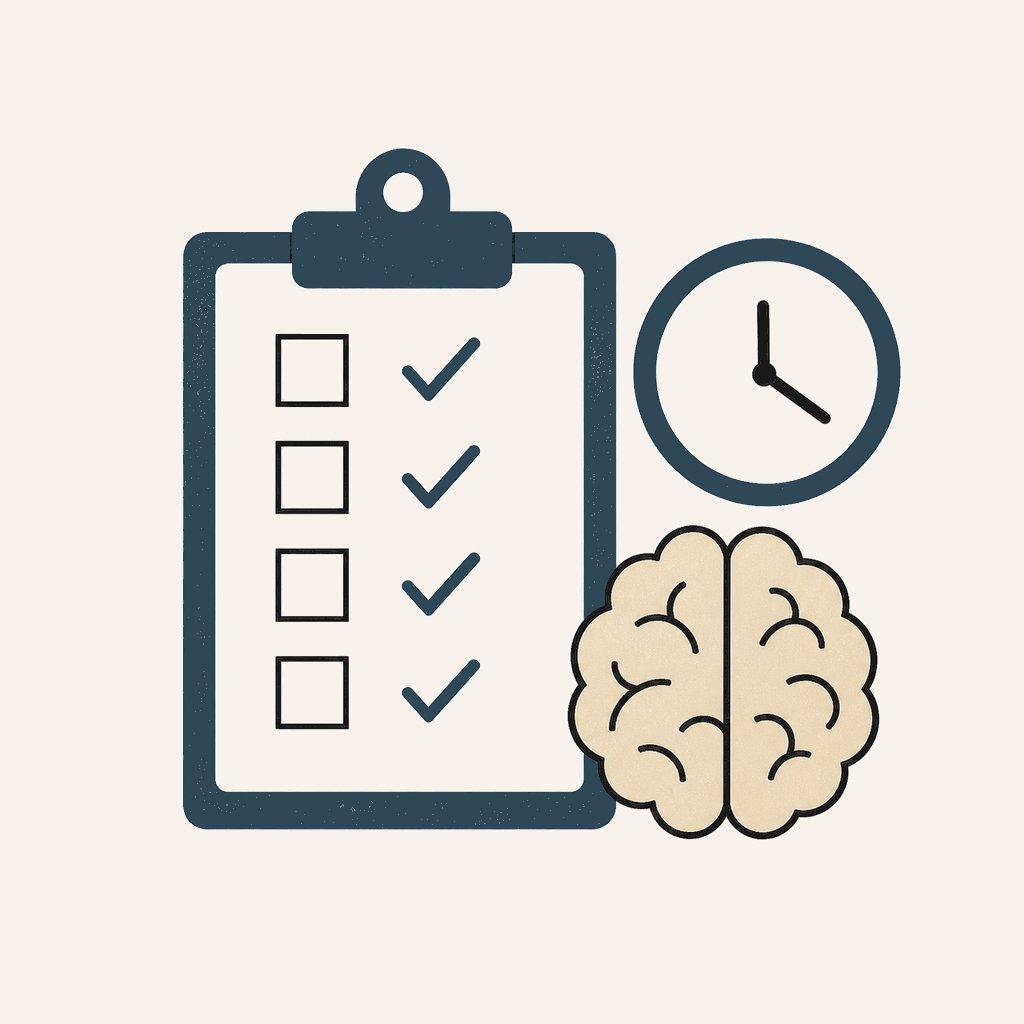
Every day after school or work, teach your child (or students) to complete a ten-minute review of any notes, worksheets, reports, memos,and assignments that you worked on in that day. This review interrupts the “forgetting cycle” and will help you prepare in advance for tests, meetings, or discussion.

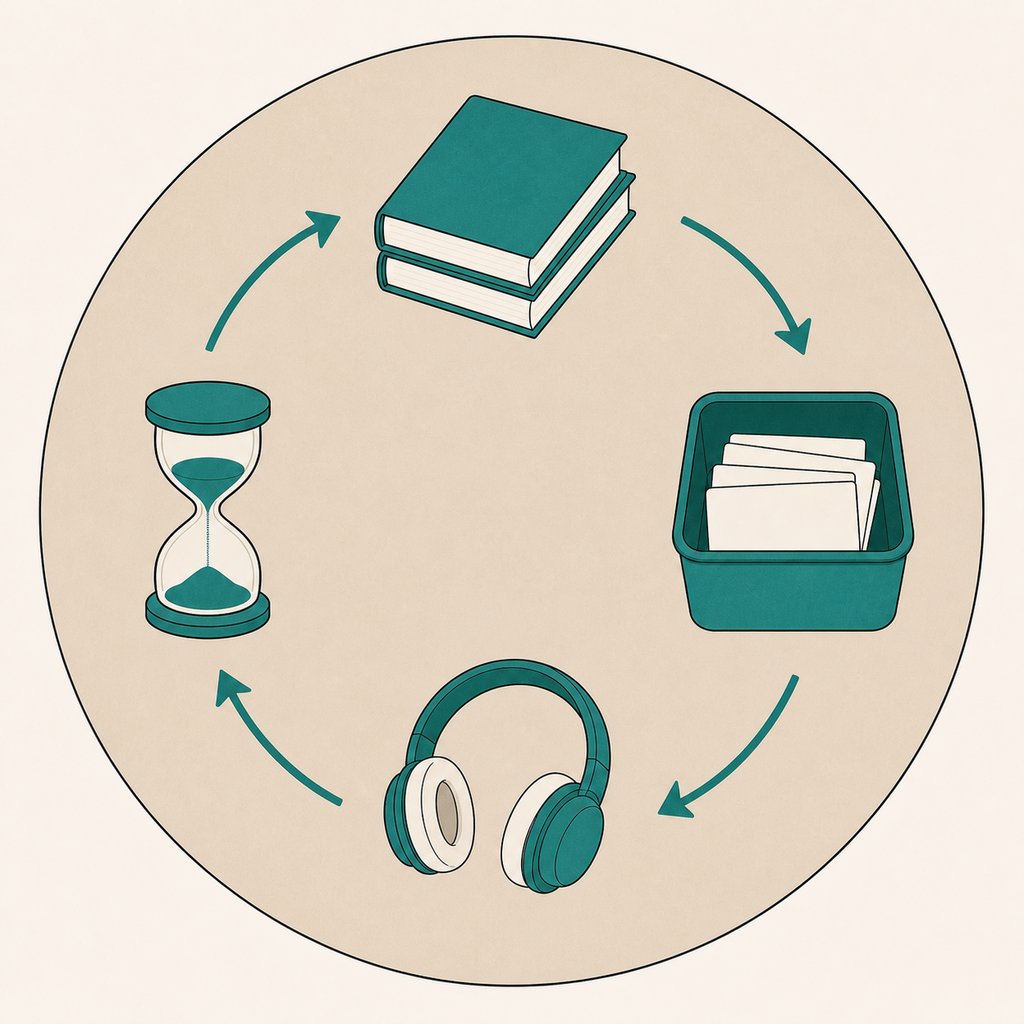
Memory research tells us that people remember up to 70% of new information only if that information is practiced and placed into the long-term memory within the first 24 hours after first learning that information. The level of retention drops to only 10% after one week. So, build in to your daily routine a review time soon after school or at the end of work every day. A little bit of review, rehearsal, and study with a Daily Review will actually save you time studying or preparing for the night before the test or business presentation.

Purchase a spiral-bound notebook for each school subject. Label each notebook, according to the subject. Write the date of your Daily Review at the top of page and list the key areas of focus for that subject or class on that day. Write possible test questions, discussion points, questions for further research,  and memory tricks to remember key ideas and details for the most important content learned that day on small sticky notes and arrange them on the Daily Review page. A few nights before an upcoming test or business meeting, you can transfer the sticky notes to a study sheet and use them to create a practice test or presentation. Also, don’t forget sticky notes that you used to take marginal annotations on worksheets, articles, and from your textbook, articles, memos, or reports.

A Few Tips for Writing Memorable Sticky Notes

1. People remember information best when that information is organized in a structured manner.

Tip: Organize your sticky notes into distinctly memorable patterns. Try general to specific, alphabetical, and chronological patterns. Color code categories with different color stickies. For example, if you are studying the explorers you could use blue for people, yellow for their countries, green for their areas of exploration, and pink for their accomplishments.

2.  People remember information that is connected to visual imagery.

Tip: Draw out quick graphic or picture representations of key ideas on your stickies.

3. People remember events and information that are made exciting, interesting, or even embarrassing.

Tip: Personalize what you are trying to remember to keep things more memorable on your stickies. Relate the information that you want to remember to events and people in your own life.

Essential Study Skills Program

Essential Study Skills

The author’s Essential Study Skills is the study skill curriculum that teaches what students need to know to succeed and thrive in schoolOften, the reason why students fail to achieve their academic potential is not because of laziness or lack of effort, but because they have never learned the basic study skills necessary for success. The 56 lessons in Essential Study Skills will teach your students to “work smarter, not harder.” Students who master these skills will spend less time, and accomplish more during homework and study time. Their test study will be more productive and they will get better grades. Reading comprehension and vocabulary will improve. Their writing will make more sense and essays will be easier to plan and complete. They will memorize better and forget less. Their schoolwork will seem easier and will be much more enjoyable. Lastly, students will feel better about themselves as learners and will be more motivated to succeed.

Essential Study Skills is the ideal curriculum for study skill, life skill, Advocacy/Advisory, and Opportunity Program classes. The easy-to-follow lesson format of 1. Personal Assessment 2. Study Skill Tips and 3. Reflection is ideal for self-guided learning and practice. Contact the publisher for affordable site licenses.

Study Skills , , , , , , , , , , ,

The Seven Essay Writing Rules

Essays have different rules than do stories, letters, poems, or journal writing. Essays respond to a writing prompt or writing topic. The writer is required to develop a thesis statement in the introductory paragraph, then follow with at least two body paragraphs which address the thesis statement, then end with a concluding paragraph.

The Common Core Writing Standards divides essays into argumentative and informational/explanatory. Argumentative essays argue a position or point of view; informational/ explanatory essays explain and analyze. Each of these types of essays focuses on the subject of the writing prompt and follows the following essay writing rules.

Keep in mind that essays are a very formal type of writing. Although they may certainly express opinions, essays present evidence in a fair and balanced manner. Think of presenting evidence in an essay as an attorney would present evidence in a court of law. All of the traditional rituals have to be followed. The attorney (writer) has introductory remarks (introductory paragraph) in which a verdict (think thesis statement) is stated. Next, the attorney (writer) presents the main points of the case and the evidence that supports them (body paragraphs). Finally, the attorney (writer) presents the closing arguments (conclusion paragraph).

Here are the seven essay writing rules:

1. Write in complete sentences. Intentional fragments, such as “Right?” don’t belong in essays.

2. Write in third person. Talk about the subject of the essay. Don’t personalize with first person pronouns such as I, me, my, mine, we, us, our, ours, ourselves. Don’t talk to the reader with second person pronouns such as you, your, yours, yourself, yourselves. The essay is to be objective (fair and balanced), not subjective (personalized). Rid essays of “I think,” “I believe,” and “In my opinion.”

3. Do not abbreviate. Abbreviations are informal and serve as short-cuts, so they don’t belong in essays. So write United States, not U.S. in essays.

4. Do not use slang, such as kids. Use official, or formal, words, such as children.

5. Do not use contractions. Again, essays are very formal, so write “do not” rather than “don’t.”

6. Do not use figures of speech. Be direct and precise in essay writing. Essays do not use poetic devices or idiomatic expressions. For example, don’t write “He let the cat out of the bag.” Instead, say “He shared a secret.”

7. Do not over-use the same words or phrases. For example, avoid over-use of the “to-be” verbs: is, am, are, was, were, be, being, been.

*****

Teaching Essays

TEACHING ESSAYS BUNDLE

The author’s TEACHING ESSAYS BUNDLE includes the three printable and digital resources students need to master the CCSS W.1 argumentative and W.2 informational/explanatory essays. Each no-prep resource allows students to work at their own paces via mastery learning. How to Teach Essays includes 42 skill-based essay strategy worksheets (fillable PDFs and 62 Google slides), beginning with simple 3-word paragraphs and proceeding step-by-step to complex multi-paragraph essays. One skill builds upon another. The Essay Skills Worksheets include 97 worksheets (printables and 97 Google slides) to help teachers differentiate writing instruction with both remedial and advanced writing skills. The Eight Writing Process Essays (printables and 170 Google slides) each feature an on-demand diagnostic essay assessment, writing prompt with connected reading, brainstorming, graphic organizer, response, revision, and editing activities. Plus, each essay includes a detailed analytical (not holistic) rubric for assessment-based learning.


Get the Essay Rules Posters FREE Resource:

Writing , , , , , , , ,

Interactive Reading-Making a Movie in Your Head

Do's and Don'ts of ELA and Reading Assessments

ELA and Reading Assessment Do’s and Don’ts: The Movie Trailer

Everyone knows that effective communication between two friends or family members is a two-way, active process. One-sided communication does not help people understand each other. People best understand one another when they pay attention to each other, see things from the other person’s point of view, and ask questions when they don’t understand each other.

Reading is different form of communication, but the process should be the same. Reading really is about communication between the reader and the author. Now, it’s true that the author is not speaking directly to the reader; however, readers read best when they pretend that this is so. Reading specialists estimate that reading comprehension is a 50-50 interaction. In other words, about half of our understanding of the text is what the reader puts into the reading, in terms of prior knowledge, understanding of word choice, and knowledge of text structure.

So, how can students  learn to read interactively to improve reading comprehension? The way we watch movies can provide some helpful insights. Most people will say that they understand movies better than they understand books. Why is this so?

First of all, the light of the movie or television screen and the sound draws your complete attention and focus. Distractions are limited, so you concentrate well.

Secondly, you actually do a lot more than “watch” a movie in the movie theater or at home. It is true that movies are a visual experience, but they are also a listening experience. The audio system and quality of the movie soundtrack make a huge difference in how well you understand a movie. Anyone who has seen a foreign movie with subtitles will admit that it is harder to understand the movie without sound. Movies are multi-sensory.

Thirdly, you involve yourself in the movie that you watch. Everyone imagines themselves shooting up the bad guys, looking into the eyes of the beautiful actress or handsome actor, or running away from the evil alien-monster-robot. You may even “talk” to the characters during crucial scenes, such as “I know what’s behind that door. Don’t open it!” You predict what will happen and probably even compare the plot to other movies of that genre as you watch. You act as a movie critic as well, thinking of how boring or exciting a scene may be.

So, let’s apply what to do as a movie watcher to what readers should do to read interactively.

First of all, limit any distractions to improve reading concentration. In the classroom, it may be asking the teacher to move seats away from a friend who talks too much. At home, it may be reading away from the distractions of the television, phone, music, or bothersome little brother.

Secondly, apply all of the senses to the reading. Listen to what the author is saying, try to feel what the characters feel, see the changing settings how the author describes them.

Thirdly, involve yourself in the reading by “talking to the text.” This internal dialog improves concentration and helps you better interact with the author. Summarize, compare, re-read, interpret, and predict frequently as you read. Make your reading a two-way active process, not a one-way passive activity.

*****

Intervention Program Science of Reading

The Science of Reading Intervention Program

The Science of Reading Intervention Program: Word Recognition includes explicit, scripted instruction and practice with the 5 Daily Google Slide Activities every reading intervention student needs: 1. Phonemic Awareness and Morphology 2. Blending, Segmenting, and Spelling 3. Sounds and Spellings (including handwriting) 4. Heart Words Practice 5. Sam and Friends Phonics Books (decodables). Plus, digital and printable sound wall cards and speech articulation songs. Print versions are available for all activities. First Half of the Year Program (55 minutes-per-day, 18 weeks)

The Science of Reading Intervention Program: Language Comprehension resources are designed for students who have completed the word recognition program or have demonstrated basic mastery of the alphabetic code and can read with some degree of fluency. The program features the 5 Weekly Language Comprehension Activities: 1. Background Knowledge Mentor Texts 2. Academic Language, Greek and Latin Morphology, Figures of Speech, Connotations, Multiple Meaning Words 3. Syntax in Reading 4. Reading Comprehension Strategies 5. Literacy Knowledge (Narrative and Expository). Second Half of the Year Program (30 minutes-per-day, 18 weeks)

The Science of Reading Intervention Program: Assessment-based Instruction provides diagnostically-based “second chance” instructional resources. The program includes 13 comprehensive assessments and matching instructional resources to fill in the yet-to-be-mastered gaps in phonemic awareness, alphabetic awareness, phonics, fluency (with YouTube modeled readings), Heart Words and Phonics Games, spelling patterns, grammar, usage, and mechanics, syllabication and morphology, executive function shills. Second Half of the Year Program (25 minutes-per-day, 18 weeks)

The Science of Reading Intervention Program BUNDLE  includes all 3 program components for the comprehensive, state-of-the-art (and science) grades 4-adult full-year program. Scripted, easy-to-teach, no prep, no need for time-consuming (albeit valuable) LETRS training or O-G certification… Learn as you teach and get results NOW for your students. Print to speech with plenty of speech to print instructional components.

SCIENCE OF READING INTERVENTION PROGRAM RESOURCES HERE for detailed product description and sample lessons.

PREVIEW TEACHING READING STRATEGIES and THE SCIENCE OF READING INTERVENTION PROGRAM RESOURCES HERE for detailed product description and sample lessons.

FREE DOWNLOADS TO ASSESS THE QUALITY OF PENNINGTON PUBLISHING RESOURCES: The SCRIP (Summarize, Connect, Re-think, Interpret, and Predict) Comprehension Strategies includes class posters, five lessons to introduce the strategies, and the SCRIP Comprehension Bookmarks.

Get the SCRIP Comprehension Strategies FREE Resource:

Get the Diagnostic ELA and Reading Assessments FREE Resource:

Literacy Centers, Reading, Spelling/Vocabulary, Study Skills , , , , , , , ,

How to Break Bad Reading Habits

Many people do not read well because of poor silent reading habits. Correcting these poor reading practices and replacing them with good reading practices will improve reading comprehension. You can become a better reader by practicing these tips.

1. Improve your reading posture. Reading difficult text is not a relaxed activity. Your body position has much to do with how well you understand the text. Reading in bed is wonderful for putting you to sleep, but not for studying. Instead, sit up straight in a straight-backed chair at a desk or table with good lighting and keep your feet flat on the floor. Place two hands on the reading. Keep the distance from eyes to book about the same distance as that of your forearm. Don’t angle the book too much so that you can keep your head straight. Not perfectly comfortable? Good! Reading is not supposed to be relaxing; it is supposed to be stimulating.

2. Adjust your reading attitude. Reading may not be your favorite mental activity, but it is a crucially important study skill. As a child, you learned to read. Now, you read to learn. Good readers learn more in school and succeed to a greater degree in the workplace. Be realistic and honest with yourself. Are you reading just to tell yourself or others that you did so? Are you reading for in-depth understanding?

3. Establish a purpose for your reading and adjust your level of comprehension. Not everything should be read for the same reading purpose. Reading an article about a favorite movie star does not require the level of comprehension that reading a computer manual does.

4. Improve your concentration. First of all, turn off the music, put away your phone, get away from the television and computer, and find a quiet room. Anything competing with full concentration reduces reading speed and reading comprehension. Good reading can not include multi-tasking. Stop taking mental vacations during your reading. For example, never allow yourself a pause at the end of a page or chapter-read on! Minimize daydreaming by forcing yourself to make personal connections with what is going on in the reading. Prompt yourself to quickly return to the text when your mind first begins wandering.

5. Improve your reading attention span. Begin with short, uninterrupted reading sessions with 100% concentration and gradually increase the length of your sessions until you can read for, say 30 minutes. Rome wasn’t built in a day and your reading attention span will take time to improve. Take a short, pre-planned break away from your reading area after a reading session. Don’t read something else during your break.

6. When reading silently, don’t pronounce the words in your head and don’t move your lips while reading. These are called sub-vocalizations and they interfere with your understanding of the text. Focus on what the author is trying to say. After all, the purpose of reading is not to say the words; the purpose of reading is to understand the meaning of the text.

*****

Intervention Program Science of Reading

The Science of Reading Intervention Program

The Science of Reading Intervention Program: Word Recognition includes explicit, scripted instruction and practice with the 5 Daily Google Slide Activities every reading intervention student needs: 1. Phonemic Awareness and Morphology 2. Blending, Segmenting, and Spelling 3. Sounds and Spellings (including handwriting) 4. Heart Words Practice 5. Sam and Friends Phonics Books (decodables). Plus, digital and printable sound wall cards and speech articulation songs. Print versions are available for all activities. First Half of the Year Program (55 minutes-per-day, 18 weeks)

The Science of Reading Intervention Program: Language Comprehension resources are designed for students who have completed the word recognition program or have demonstrated basic mastery of the alphabetic code and can read with some degree of fluency. The program features the 5 Weekly Language Comprehension Activities: 1. Background Knowledge Mentor Texts 2. Academic Language, Greek and Latin Morphology, Figures of Speech, Connotations, Multiple Meaning Words 3. Syntax in Reading 4. Reading Comprehension Strategies 5. Literacy Knowledge (Narrative and Expository). Second Half of the Year Program (30 minutes-per-day, 18 weeks)

The Science of Reading Intervention Program: Assessment-based Instruction provides diagnostically-based “second chance” instructional resources. The program includes 13 comprehensive assessments and matching instructional resources to fill in the yet-to-be-mastered gaps in phonemic awareness, alphabetic awareness, phonics, fluency (with YouTube modeled readings), Heart Words and Phonics Games, spelling patterns, grammar, usage, and mechanics, syllabication and morphology, executive function shills. Second Half of the Year Program (25 minutes-per-day, 18 weeks)

The Science of Reading Intervention Program BUNDLE  includes all 3 program components for the comprehensive, state-of-the-art (and science) grades 4-adult full-year program. Scripted, easy-to-teach, no prep, no need for time-consuming (albeit valuable) LETRS training or O-G certification… Learn as you teach and get results NOW for your students. Print to speech with plenty of speech to print instructional components.

SCIENCE OF READING INTERVENTION PROGRAM RESOURCES HERE for detailed product description and sample lessons.

Get the SCRIP Comprehension Strategies FREE Resource:

Get the Diagnostic ELA and Reading Assessments FREE Resource:

Literacy Centers, Reading, Spelling/Vocabulary, Study Skills , , , , , , , ,

Why English Spelling Is So Difficult

Brief History of the English Language

Brief English Language History

President Andrew Jackson once remarked, “It’s a d____ poor mind that can think of only one way to spell a word!” Many Americans would readily agree. In fact, the English language is notorious for its spelling irregularities. Looking at the glass as being half-empty, it is true that only about half of our spellings exactly match their sounds.

What a crazy system, in which the word fish could be spelled as “ghoti.” That’s /f/ spelled “gh” as in rough, /i/ spelled “o” as in women, and /sh/ spelled /ti/ as in nation. Or how about the fact that the “ur” sound /ur/ can be spelled differently five times in one sentence? Her nurse first works early. Or how about the fact that the “sh” sound /sh/ can be spelled in 14 different ways? shine, sugar, ocean, tissue, ration, fuchsia, shist, pshaw, spacious, nauseous, anxious, conscious, chaperone, mansion.

However, looking at the glass as being half-full, the fact that 50% of the spellings exactly match their sounds certainly provides a helpful foundation upon which to build good spelling. We don’t have to memorize every word individually. Upon this 50% foundation, an additional 30% of spellings which conform to about eight of the most useful spelling rules can be added. This leaves about 20% of the words that must be memorized. We call these “Outlaw Words” for good reason. Jessie James couldn’t even spell his own name!

Additionally, our vocabulary is an amalgam of linguistic and historical influences. Over 50% of our academic words are built on ancient Greek and Latin word parts. French and Spanish add to our spelling lexicon as well. So, by studying languages we also improve our English spelling. If fact, spelling and vocabulary have a reciprocal relationship-spelling influences vocabulary and, conversely, vocabulary influences spelling.

So, given that our English spelling system is not simplistic, what should we do?

Diagnostic Literacy Assessments

Diagnostic Reading and Spelling Assessments

1.      Master the 50% foundation. The common sound spellings are very consistent. A wonderful multiple choice assessment of these patterns can be downloaded free at .

2.      Learn the eight conventional spelling rules that will add on another 30% of the spelling words that would be otherwise irregular.

3.      Memorize the common Outlaw Words. Many of these are our most frequently used words.  Make up memory tricks such as “you would rather have more dessert than a desert” or the “principal is my pal” for difficult words that do not follow the spelling patterns or conventional spelling rules.

4.      Memorize the most frequently misspelled words and commonly confused words.

5.      Memorize homophones: words that sound the same, but are spelled differently.

6.      Study the etymological (how the word was formed in its historical context) connections from Old and Middle English.

7.      Study the derivational spellings from other languages. Example: colonel from the French

A Model Grades 3-8 Spelling Scope and Sequence

Differentiated Spelling Instruction Grades 4-8

Differentiated Spelling Instruction

Preview the Grades 3-8 Spelling Scope and Sequence tied to the author’s comprehensive grades 3-8 Language Strand programs. The instructional scope and sequence includes grammar, usage, mechanics, spelling, and vocabulary. Teachers and district personnel are authorized to print and share this planning tool, with proper credit and/or citation. Why reinvent the wheel? Also check out my articles on Grammar Scope and Sequence, Mechanics Scope and Sequence, and Vocabulary Scope and Sequence.

FREE DOWNLOAD TO ASSESS THE QUALITY OF PENNINGTON PUBLISHING AMERICAN ENGLISH AND CANADIAN ENGLISH SPELLING PROGRAMS. Check out these grades 3-8 programs HERE. Administer my FREE comprehensive Diagnostic Spelling Assessment with audio file and recording matrix. It has 102 words (I did say comprehensive) and covers all common spelling patterns and conventional spelling rules. It only takes 22 minutes and includes an audio file with test administration instructions. Once you see the gaps in your students’ spelling patterns, you’re going to want to fill those gaps.

Get the Diagnostic Spelling Assessment, Mastery Matrix, and Sample Lessons FREE Resource:


Reading, Spelling/Vocabulary, Study Skills , , , , , , , , , , ,

How to Teach Context Clue Strategies

Grades 4-8 Comprehensive Vocabulary

Comprehensive Vocabulary

Students can learn context clue strategies to problem-solve the meanings of unknown words. But wouldn’t it be more precise to use the dictionary? No. The dictionary is a fine tool and should be used to look up words that are critical to the comprehension of any reading. However, the dictionary is not a practical tool for reading complex, domain-specific text. However, often the definition frequently does not fit the connotative meaning of the word as used in the reading passage. Additionally, there are often multiple definitions—which one fits? Context always determines meaning. Also, looking up one in every twenty words adversely affects comprehension. Time spent looking up words is reductive. The few minutes it takes to look up and internalize the definition could be better spent reading more text, because the more words read provides more exposure and practice—the keys to efficient vocabulary acquisition.

So, learning and practicing context clue strategies makes sense. Context clue strategies can be internalized with sufficient practice and can be flexibly applied by skillful readers to figure out the meaning of many unknown words without adversely impacting comprehension. The best way to apply context clue strategies is to learn the problem-solving strategies detailed in FP’S BAG SALE. When readers come to an unknown word, they apply the relevant steps of the FP’S BAG SALE strategy to get a good clue about the meaning of an unknown word. Download this strategy and two accompanying worksheets with answers.

Get the Context Clues Worksheets FREE Resource:

Flexibility is key to using context clue strategies. Multiple strategies provide multiple ways of problem-solving. Good readers learn to quickly sort through the options and select the strategy or strategies that works best. They also accept the fact that context clue strategies don’t always work and that understanding every single word is not necessary for the purpose of reading—effective meaning-making.

Initially, readers should follow the steps of the FP’S BAG SALE context clues approach in order to problem-solve the meanings of unknown words. Then, through teacher modeling and guided practice, students should learn to efficiently “hunt and peck” for clues to meaning by applying the individual steps.

FP’S BAG SALE

Finish the sentence. See how the word fits into the whole sentence.

Pronounce the word out loud. Sometimes hearing the word will give you a clue to meaning.

Syllables–Examine each word part. Word parts can be helpful clues to meaning.

Before–Read the sentence before the unknown word. The sentence before can hint at what the word means.

After–Read the sentence after the unknown word. The sentence after can define, explain, or provide an example of the word.

Grammar–Determine the part of speech. Pay attention to where the word is placed in the sentence, the ending of the word, and its grammatical relationship to other known words for clues to meaning.

Synonym–Sometimes an unknown word is defined by the use of a synonym. Synonyms appear in apposition, in which case commas, dashes, or parentheses are used. Example: The wardrobe, or closet, opened the door to a brand new world.

Antonym–Sometimes an unknown word is defined by the use of an antonym. Antonym clues will often use Signal Words such as however, not, but, in contrast Example: He signaled a looey, not a right turn.

Logic–Your own knowledge about the content and text structure may provide clues to meaning. Logic clues can lead to a logical guess as to the meaning of an unknown word. Example: He petted the canine, and then made her sit up and beg for a bone.

Example–When part of a list of examples or if the unknown word itself provides an example, either provides good clues to meaning. Example clues will often use Signal Words such as for example, like, such as Example: Adventurous, rowdy, and crazy pioneers all found their way out West.

How to Practice Context Clue Strategies

Select passages from the textbook or literature that contain unknown words. Demonstrate how to problem-solve the meaning of the unknown words by doing a “Think-Aloud” of the FP’S BAG SALE strategies. Select words that can be specifically determined by each step of the process. Also, select words that have no helpful context clues to show how the process is not fool-proof.

Select passages from the textbook or literature, scan into a word processor and delete every twentieth word, skipping articles, conjunctions, and prepositions. This is known as a CLOZE passage. Then have the reader use the FP’S BAG SALE strategies to guess the meaning of the deleted words. Compare reader answers with the original words and award points for correct answers. Of course, synonyms are fine and will promote rich denotative and connotative word discussions.

*****

For full-year vocabulary programs which include multiple meaning words (L.4.a.), Greek and Latin morphology with Morphology Walls (L.4.a.), figures of speech (L.5.a.), words with special relationships (L.5.b.), words with connotative meanings (L.5.c.), and academic language words (L.6.0), check out the assessment-based grades 4, 5, 6, 7, and 8 Comprehensive Vocabulary.

Get the Grades 4,5,6,7,8 Vocabulary Sequence of Instruction FREE Resource:

Get the Greek and Latin Morphology Walls FREE Resource:

Get the Diagnostic Academic Language Assessment FREE Resource:

Reading, Spelling/Vocabulary , , , , , , , , ,

Learning Vocabulary from Independent Reading

Grades 4-8 Comprehensive Vocabulary

Comprehensive Vocabulary

Research has debunked the word list method of vocabulary instruction. The give-them-twenty-words-on-Monday-and-test-on-Friday approach is as American as apple pie, but is also highly inefficient. The English lexicon of over 800,000 words is just too vast to rely on rote memory of individual words. I suggested that the two most efficient methods of vocabulary instruction consist of 1. wide reading with refined context clues strategies and 2. word part memorization. This article will discuss how we learn vocabulary from independent reading.

To understand how we learn vocabulary, it is helpful to examine how children build their bank of words through oral vocabulary acquisition. By age five, children have gained up to a 10,000 word vocabulary including common inflections such as suffixes. How did children who may only have one year of pre-school and one year of kindergarten gain such an extensive vocabulary? Exposure and practice. Children are bombarded with oral language from parent “oohs and ahs” to simple conversations to the background noises and words of daily life. In homes that are rich in communication, children before the age of four have heard 45 million words. In contrast, in homes that do not provide rich communication, children before the age of four have heard only 13 million words (Hart and Risley 1996).

Noam Chomsky’s theory of an innate universal grammar explains how children are able to apply words into meaningful phrases and sentence structures in an efficient manner. Children fit new words into the morphological (meaning) and syntactical (grammatical) context of old words and so language acquisition compounds. New words are not learned in isolation, but in the context of what has been previously mastered and practiced. But why do children learn words so quickly while adolescents and children learn words at such a slower rate? Is it because “you can’t teach a dog new tricks” or a change in brain development? No. Primarily the reasons are exposure and practice.

After the first 10,000 words, the rest are rare words, and these play a critical role in academic reading. The utility of our academic vocabulary is determined not by the first 10,000 words, but by how many of the rare words we understand (Hart and Risley 1996). The next 20,000 words learned by most college-educated adults takes about twenty years to acquire. Exposure to and practice of more sophisticated words is much less frequent than the “meat and potatoes” words of childhood. A brief example may be helpful. A child learns the word hungry at a very early age. The word has two syllables and is phonetically regular. A late teen or early adult may learn the word famished. The word has two syllables and is phonetically regular. The difference in word acquisition between hungry and famished is influenced by exposure. A child first hears the word hungry early in life and most every day thereafter from parents or from television. An adult may hear or read the word famished once every few months. The difference in word acquisition between hungry and famished is also influenced by practice. The word hungry is a high utility word. Both children and adults say this word often in all of its inflected forms. The word famished is just not said as often.

So, beyond the first 10,000 words of life, do we continue to learn most of our vocabulary through skillful listening? No. A few interesting facts will prove this point. The first 1,000 words acquired by children constitute the vast majority of words used by and heard by even the most educated adults on a daily basis. Watching and listening to thirty minutes of Sesame Street exposes the viewer to an average of only one word beyond the highest frequency 1,000 words. Watching and listening to the nightly news for the same amount of time exposes to viewer to only nineteen of these key words (adapted from Hayes and Athens 1988).

However, in contrast, reading provides a much higher exposure to words beyond the most frequently used 1,000 words. For example, reading a challenging comic book for thirty minutes exposes the reader to fifty-three of these words. Reading a challenging book for the same amount of time exposes a reader to seventy-five. So, reading challenging text certainly provides a greater opportunity to expand one’s vocabulary through exposure and practice than does listening alone.

Now, how can we make wide reading of challenging text more efficient for vocabulary acquisition? First of all, because exposure to the right words is so critical, it is essential to carefully choose reading text for optimal practice. According to reading specialists, reading text that has 5% unknown words should be our target reading text to maximize vocabulary acquisition. Readers can maintain good comprehension while exposing themselves to 300 unknown words in thirty minutes of reading. This assumes an average reading rate of 200 words per minute with 6,000 words read in thirty minutes, of which 5% unknown words would be 300. Assuming that a reader would “naturally” acquire 5% of these unknown words via unrefined use of context clues, the reader would have a net gain of 15 new words from the reading session. Thus, four days of thirty minutes (two hours) reading practice would better a reader’s vocabulary by 60 words—substantially better than acquiring 20 new words each week by memorizing a list of words. Also, the prospect of additional practice of these words is much higher than that of the random word list memorized for the Friday test.

How can you pick a book to read that has 5% unknown words? Choose a book of any genre and count the number of words on any complete page found near the beginning of the book and multiply that number by 3. Read a page toward the beginning of the book, counting the number of unknown words. A good guideline would be “if you can’t define it with a synonym, antonym, or example,” it is unknown. Then, read a page near the middle of the book and continue the count. Finally, read a page near the end of the book and finish the count. Divide the total number of unknown words by the total number of words found on the three pages. The result will be the percentage of unknown words. Anything within the 4-6% range is acceptable. For example, a reader counts the number of words on a page and arrives at 225. 225 x 3 = 750. After reading the three pages, the amount of unknown words totals 30. 30.00 divided by 750 = .05, or 5%. Check out these independent reading resources to help you develop a model independent reading program.

Additionally, reading specialists would argue that the 5% retention rate can be doubled to 10% by applying refined context clue strategies. Doubling the number of words acquired from thirty minutes reading each day would produce a net gain of 30 new words from each reading session or 120 words each week, considering four such sessions. 120 words per week, multiplied by 33 weeks in a school year produces 3960 new words in a school year—surpassing the target for the 3,000 new words that reading specialists suggest are necessary to make grade level growth in vocabulary development.

In order to refine context clue strategies, readers need to learn the types of context clues that work most often to help readers figure out unknown words. By examining surrounding sentence and word clues according to these context clue categories, more unknown words can be figured out. So, grab a second cup of coffee for the next article, Part III, and learn how to teach the refined context clue strategies that will double the amount of words that readers acquire through reading challenging text.

*****

For full-year vocabulary programs which include multiple meaning words (L.4.a.), Greek and Latin morphology with Morphology Walls (L.4.a.), figures of speech (L.5.a.), words with special relationships (L.5.b.), words with connotative meanings (L.5.c.), and academic language words (L.6.0), check out the assessment-based grades 4, 5, 6, 7, and 8 Comprehensive Vocabulary.

Get the Context Clue Strategies FREE Resource:

Get the Grades 4,5,6,7,8 Vocabulary Sequence of Instruction FREE Resource:

Get the Greek and Latin Morphology Walls FREE Resource:

Get the Diagnostic Academic Language Assessment FREE Resource:

Reading, Spelling/Vocabulary , , , , , , , , ,

Learn Vocabulary by Reading

Don’t read this article if you susceptible to thin-skin teacher disease. The typical vocabulary instruction in many classrooms includes passing out a “big words” list of 20 vocabulary terms on Monday and quizzing on this list on Friday. Starting to cringe? And now the buts start to formulate.

But half of those words on my list are from the literature selections this week.

But half of the words on my list are SAT®/ACT/academic language words.

But half of the words on my list are grade-level words that my students should know.

Other buts will focus on the learning process:

But I make them write out each word ten times.

But I make them create flashcards for each word.

But I use a crossword generator and have them do a crossword.

But I use a word jumble generator and have them do a word jumble.

But I have them underline the prefixes and suffixes and circle the roots.

Learning Vocabulary through Reading

Building Vocabulary through Reading

If some of us are truly honest about why we really teach what and how we teach, we might confess, “That’s what and how I learned, and I turned out okay.”

The problem with the typical vocabulary instructional practice described above is not necessarily the selection of the words, themselves, nor the teaching approach. Indeed, the problem is one of effectiveness. According to research, “Rote memorization of words and definitions is the least effective instructional method resulting in little long-term effect (Kameenui, Dixon, Carine 1987).”

Also, the problem of teaching vocabulary as described above is one of efficiency. Let’s do the math.

If students remember all 20 words, each week for the entire school year, they will have mastered 600 words. Now, realistically, if teachers got students to remember half of those words by the end of the year, most would be pleased. That leaves 300 words mastered per school year.

But, the American lexicon is over 800,000 words, and the SAT® word bank is over 30,000 words. Students need to learn 3,000 new words per year just to make one grade level reading progress (Honig 1983). Learning 300 words per year is a very small drop in a very big bucket. So, not only is rote word memorization ineffective, it is also inefficient.

For thick-skinned teachers who have made it to this point in the article, there is hope. Students can master the 3,000 new words (or more) this year that reading experts agree are necessary to achieve one-year-growth in reading levels. How? Through independent reading. 

If students read challenging text (with about 5%) unknown Tier 2 words, 30 minutes per day, four days per week, they will be exposed to 30,000 new words during the school year. Assuming that students will master the meanings of about 10% of those words through context clues, they will meet the 3,000 new words goal. But, we can do better. By teaching students to use context clues more effectively, we can confidently up that level of contextual mastery during independent reading to 15 or 20%.

Grades 4-8 Comprehensive Vocabulary

Comprehensive Vocabulary

At this point, some some teachers might be tempted to follow former sixth grade teacher Donalyn Miller’s advice (The Book Whisperer) and allocate that 30 minutes of class time per day (or more) to independent reading. Perhaps vocabulary acquisition really is a natural process that is caught, not taught (Steven Krashen). Rather than teach, teachers should simply facilitate vocabulary acquisition by providing plenty of engaging books in their classrooms and time each day for sustained silent reading and rich literacy discussions.

Not so fast. I would encourage teachers not to give into that temptation. We still need to earn our paychecks. We can use homework for that independent reading time and save valuable class time for instruction. As a former principal of mine once said, “We’re not paying you the big teacher bucks to babysit students while they read.”

But let’s remember that most independent reading consists of Tier 1 words. We do need explicit vocabulary instruction to make a dent in those Tier 2 words which constitute the bulk of our academic language.

*****

For full-year vocabulary programs which include multiple meaning words (L.4.a.), Greek and Latin morphology with Morphology Walls (L.4.a.), figures of speech (L.5.a.), words with special relationships (L.5.b.), words with connotative meanings (L.5.c.), and academic language words (L.6.0), check out the assessment-based grades 4, 5, 6, 7, and 8 Comprehensive Vocabulary.

Get the Context Clue Strategies FREE Resource:

Get the Grades 4,5,6,7,8 Vocabulary Sequence of Instruction FREE Resource:

Get the Greek and Latin Morphology Walls FREE Resource:

Get the Diagnostic Academic Language Assessment FREE Resource:

Literacy Centers, Reading, Spelling/Vocabulary, Study Skills, Writing , , , , , , , , , , , , , , , , ,